
The Science of Milk Density: Why Protein is Your Best Friend
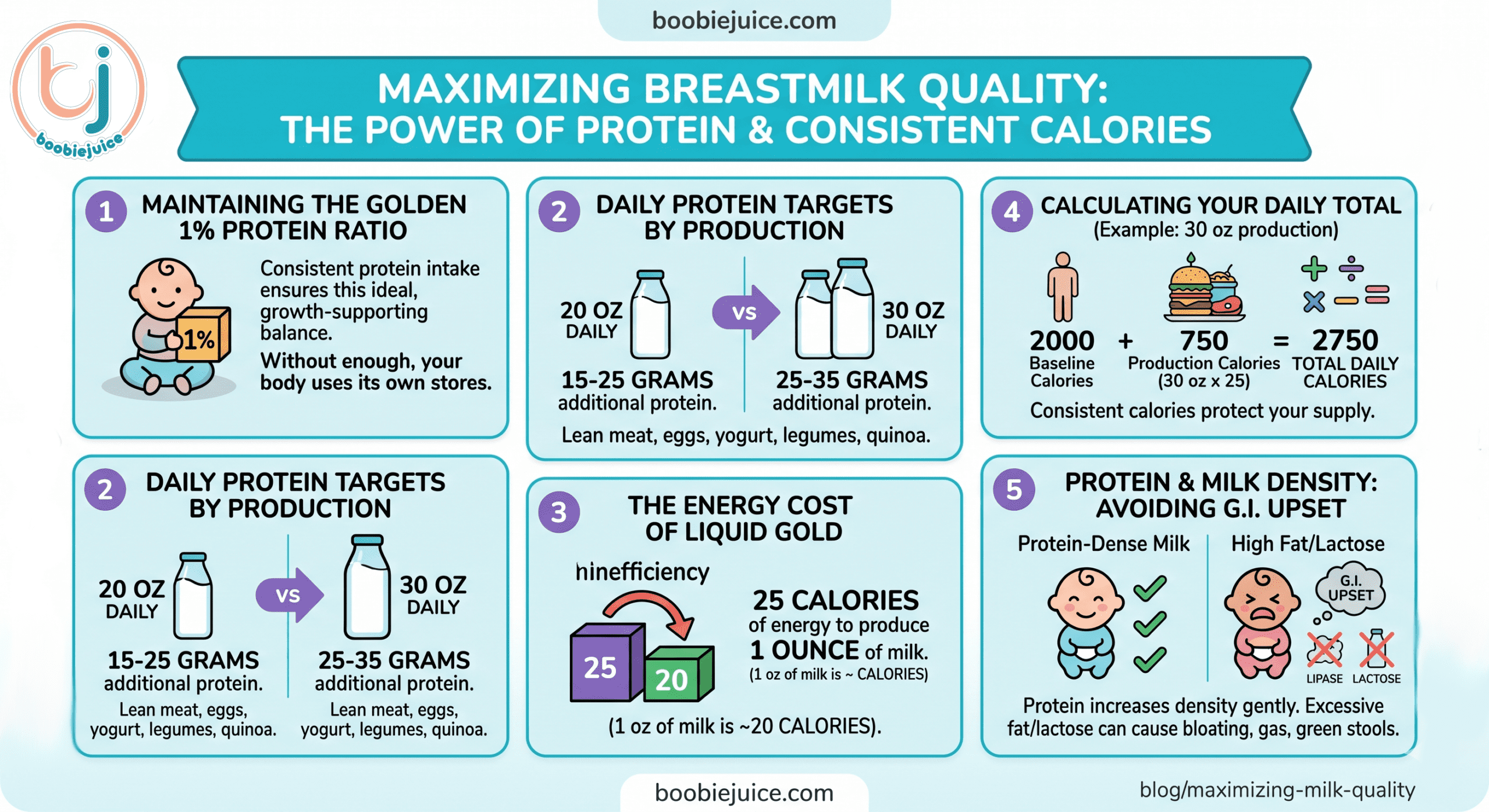
When we talk about “rich” breast milk, the conversation usually shifts straight to fat. However, if you are looking to maximize the nutritional punch of every ounce, there is a better way. Protein is the single most beneficial source for increasing breast milk density.
While fat adds calories, it actually decreases the overall density of the fluid. Protein, conversely, adds structural mass and essential amino acids, making the milk “thicker” from a nutrient standpoint without the potential digestive fallout of other macronutrients.
The Digestive Balance: Protein vs. Fat and Lactose
One of the biggest hurdles for a developing baby is a sensitive gut. When breast milk shifts too far into high-fat or high-lactose ranges (above the typical biological norms), it can cause significant distress:
-
The Lactose & Fat Trap: High levels of lactose or fat can lead to G.I. upset, including green frothy stools, painful bloating, and diarrhea. This happens because the baby’s system simply isn’t equipped to process those spikes in volume efficiently.
-
The Protein Advantage: Protein-dense milk is highly bioavailable. It supports growth and “density” while being much gentler on the stomach, helping you avoid the fussiness that comes with a macro-imbalance.
The Calories Behind the Gold
Producing dense, high-protein milk is an energy-intensive process. Breast milk is a marvel of efficiency, but it isn’t “cheap” for your body to produce.
-
The Energy Cost: It takes roughly 25 calories to produce 1 ounce of breast milk (which contains 20 calories).
-
The Production Math: If you are producing 30 ounces a day, your body is burning 750 calories just on production ().
-
Your New Daily Total: To maintain your baseline weight (assuming a 2,000-calorie baseline), you need to eat 2,750 calories per day.
Consistency is key. If you don’t eat enough, your body will eventually struggle to maintain that golden 1% protein ratio, often pulling from your own muscle tissue to compensate.
The Calories Behind the Gold
You’ve done the work to eat the protein and track the calories—now don’t let those nutrients degrade. At BoobieJuice, we specialize in preserving the exact molecular structure of your milk.
Our
Explore more Content:
Breast Milk Macro Nutrient Testing
Whether you are deep in the trenches of your breastfeeding journey or planning for the long term, BoobieJuice offers professional-grade clarity through our dual testing pathways. We provide comprehensive macro analysis as part of our signature freeze-drying service, giving you a detailed breakdown of your milk’s kcal, protein, carbohydrate/lactose, fat, mineral salt, moisture, and density before it is preserved. For parents who simply want to optimize their current nursing or pumping routine, we also offer stand-alone nutritional testing. This deep dive into your milk’s composition allows you to see exactly how your diet is impacting your protein ratios in real-time, empowering you with the data needed to fuel your baby’s development with scientific precision.